
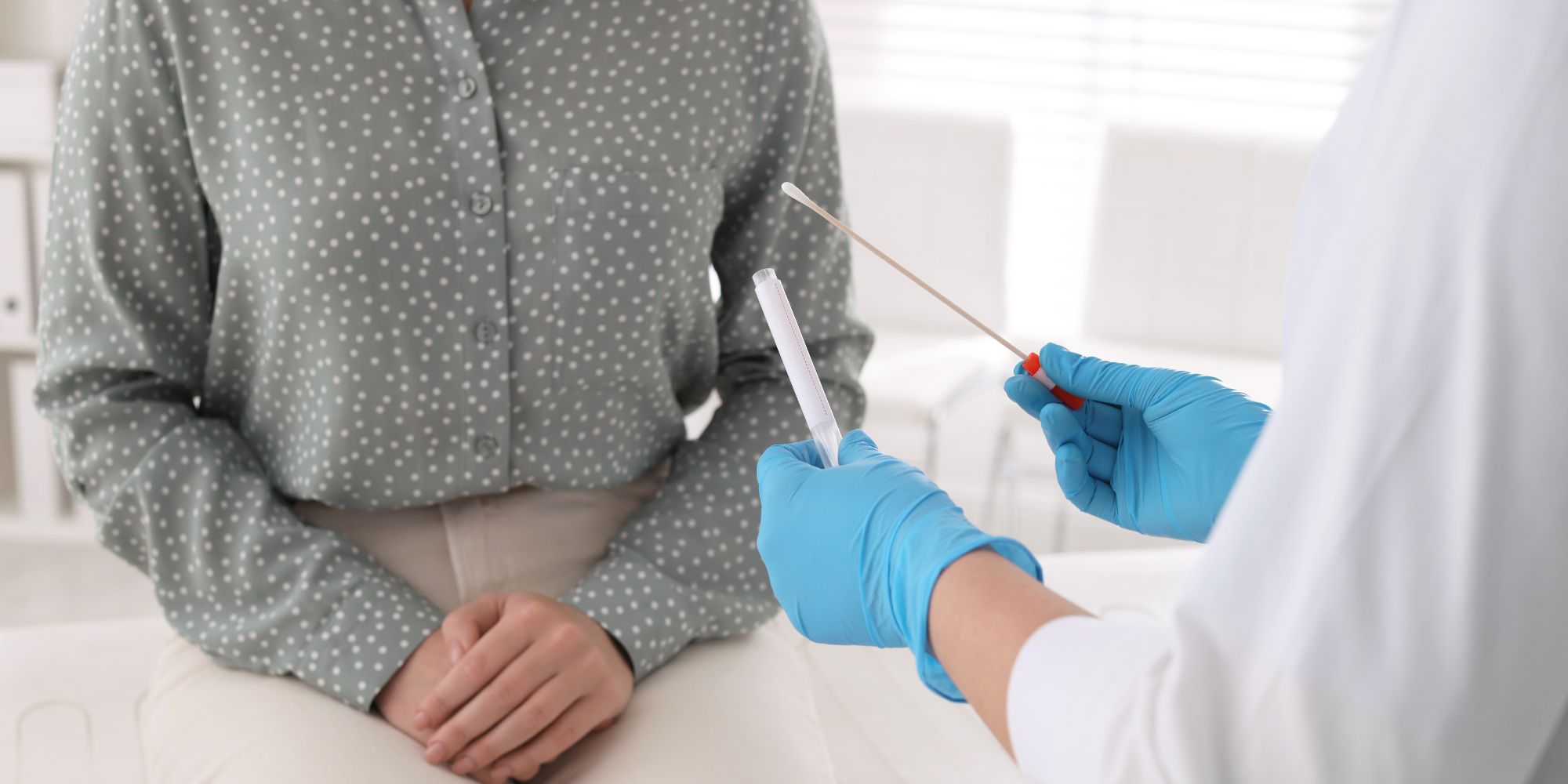
If you’re sexually active, it’s possible that you’ve been exposed to an STD or STI at some point. You may be considering getting tested, but it can feel uncomfortable or even embarrassing to talk about.
Here’s the thing: you should never feel ashamed for taking charge of your sexual health! Getting tested is one of the most responsible things you can do for yourself and your partner.
Today, we’re exploring four important reasons why you need to get tested for STIs and STDs. Keep reading to learn more.
STI vs. STD: What’s the Difference?
Although the terms STI and STD are often used interchangeably, there is a difference. A sexually transmitted infection (STI) is a virus, fungus, parasite, or bacteria that is spread through sexual contact.[1]
A sexually transmitted disease (STD) develops as a result of an STI. The term implies that the infection has led to a disease.[1]
Some of the most common STIs include[2]:
- Chlamydia
- Genital herpes
- Genital warts
- Gonorrhea
- HIV
- HPV
- Syphilis
- Trichomoniasis
Now let’s discuss why you need to get tested for STIs and STDs.
1. Not All STDs and STIs Have Symptoms
Many people don’t even realize they have an infection because they don’t experience any symptoms. For example, up to 75% of women with chlamydia are asymptomatic.[3] It’s very easy for infections to go unnoticed until a partner is diagnosed or if complications arise later on.[4]
The sooner you get tested, the better. Certain infections, like HIV, are much easier to treat when caught early. Early intervention can decrease your risk of developing AIDS and other serious conditions.[5] Additionally, by getting tested and treated, you do your part to keep them from spreading to other people.
2. They’re More Common Than You Think
STDs and STIs are quite common. In fact, more than 25 million sexually transmitted infections occur each year in the United States.[6] The CDC estimates that 1 in 5 people have an STD.[7]
If you’re sexually active, there’s a chance you’ve been exposed at some point, whether you realize it or not.
3. They Can be Transmitted Through Different Forms of Contact
If you’ve never had vaginal intercourse, you may think you’re safe from STDs and STIs. However, some infections can be spread through other forms of contact, such as anal sex, oral sex, or kissing:
- Oral herpes[8]
- Herpes simplex virus (HSV)[9]
- Human papillomavirus (HPV)[2]
It’s worth getting tested even if you haven’t had any intimate sexual contact with your partner. This will help prevent any infections from spreading further and allow you both to get the care you need!
4. They Can Cause Lasting Damage to Your Reproductive Health
When left untreated, certain infections (such as gonorrhea and chlamydia) can lead to Pelvic Inflammatory Disease (PID), an infection of a woman’s reproductive organs[10]. PID is known to increase the risk of ectopic pregnancy and even infertility.[11]
PID can be treated when discovered early, but treatment can’t reverse the damage it’s already done. If you’ve had PID before, you’re at higher risk of getting it again. Additionally, it can return if you get reinfected with an STD.
How Often Should You Get Tested for STIs?
If you’re sexually active, it’s crucial to get tested regularly to protect your health! The CDC recommends that[13]:
- Sexually active teens and adults (from age 13 onward) should be tested for HIV at least once a year.
- Sexually active women should be tested for gonorrhea and chlamydia once a year, especially if they have multiple sex partners or a partner (whether past or present) who has tested positive for an STD.
Pregnant women should be tested for syphilis, HIV, hepatitis B, hepatitis C, chlamydia, and gonorrhea early in pregnancy. Repeat testing may be needed in some cases.
Free STI Testing in Florence, Kentucky
Looking for confidential, compassionate STI testing in Florence, Kentucky? Care Net Pregnancy Services of Northern Kentucky is here to help. We test for Gonorrhea, Trichomoniasis, and Chlamydia and provide referrals for all other STDs and STIs. No insurance needed!
Take charge of your sexual health today. Give us a call at (859) 282-9878 or schedule your appointment online.
Please be aware that Care Net Pregnancy Services of Northern Kentucky does not provide or refer for abortion services.
Sources
- About Sexually Transmitted Infections (STIs). Centers for Disease Control and Prevention. (2024, March 25). https://www.cdc.gov/sti/about/index.html
- National Library of Medicine. (2025, July 15). Sexually Transmitted Infections. Medline Plus. https://medlineplus.gov/sexuallytransmittedinfections.html
- Patel, C. G., Trivedi, S., & Tao, G. (2018, September). The Proportion of Young Women Tested for Chlamydia Who Had Urogenital Symptoms in Physician Offices. U.S. National Library of Medicine. https://www.ncbi.nlm.nih.gov/pmc/articles/PMC6823598/
- Mayo Foundation for Medical Education and Research. (2021, September 21). Sexually transmitted diseases (STDs). Mayo Clinic. https://www.mayoclinic.org/diseases-conditions/sexually-transmitted-diseases-stds/symptoms-causes/syc-20351240#
- U.S. Department of Health and Human Services. (2022, October 21). Early HIV diagnosis and treatment important for better long-term health outcomes. National Institutes of Health. https://www.nih.gov/news-events/news-releases/early-hiv-diagnosis-treatment-important-better-long-term-health-outcomes
- Sexually Transmitted Infections. Cleveland Clinic. (2023, February 3). https://my.clevelandclinic.org/health/diseases/9138-sexually-transmitted-diseases–infections-stds–stis
- Sexually Transmitted Infections Prevalence, Incidence, and Cost Estimates in the United States. Centers for Disease Control and Prevention. (2024, April 3). https://www.cdc.gov/sti/php/communication-resources/prevalence-incidence-and-cost-estimates.html#
- Oral Herpes. Johns Hopkins Medicine. (2021, August 8). https://www.hopkinsmedicine.org/health/conditions-and-diseases/herpes-hsv1-and-hsv2/oral-herpes#
- World Health Organization. (2025, May 30). Herpes simplex virus. World Health Organization. https://www.who.int/news-room/fact-sheets/detail/herpes-simplex-virus#
- Pelvic inflammatory disease (PID). Mayo Clinic. (2022, April 30). https://www.mayoclinic.org/diseases-conditions/pelvic-inflammatory-disease/symptoms-causes/syc-20352594
- Getting Tested for STIs. Centers for Disease Control and Prevention. (2025, January 31). https://www.cdc.gov/sti/testing/index.html